


December 22, 2025
"Do We Get Overtime Pay for Drinking Parties?" - Thoughts on the Video
"Do We Get Overtime Pay for Drinking Parties?" Why Young People Don't Want to Go to Drinking Parties?
A short video has gone viral showing a subordinate invited to a drinking party asking his boss, "Do we get overtime pay?"
It might be a comedy skit, but the subordinate's argument is essentially: "We're in a work relationship, so it's strange that we don't get paid hourly for something that isn't work-related." He also says there are more enjoyable forms of entertainment than drinking alcohol, and if there's no overtime pay, he'd rather spend his time on things they like.
It's so logical that it seems hard to argue against.
"I'd hate a new employee like this" versus "I understand the new employee's feelings."
Internet reactions are varied, but when I thought about it in my own way, I gained one insight.

"Do We Get Overtime Pay for Drinking Parties?"
Whether this is an actual exchange or a skit is unclear, but in a short video that appeared on social media, this kind of exchange unfolds:
Subordinate: Boss, It's about a company drinking party--do we get overtime pay?
Boss: No. Why did you think you would?
Subordinate: Isn't it outside working hours? Doesn't it count as overtime?
Boss: Then you don't have to come.
Subordinate: But I don't want my evaluation to drop because I didn't go.
Boss: It's basically not work, so you don't have to come.
After this, what I felt was a futile debate continues.
Regarding the often-discussed topic of "are drinking parties mandatory," I think it all comes down to whether you can feel that "you received something, even if not money."
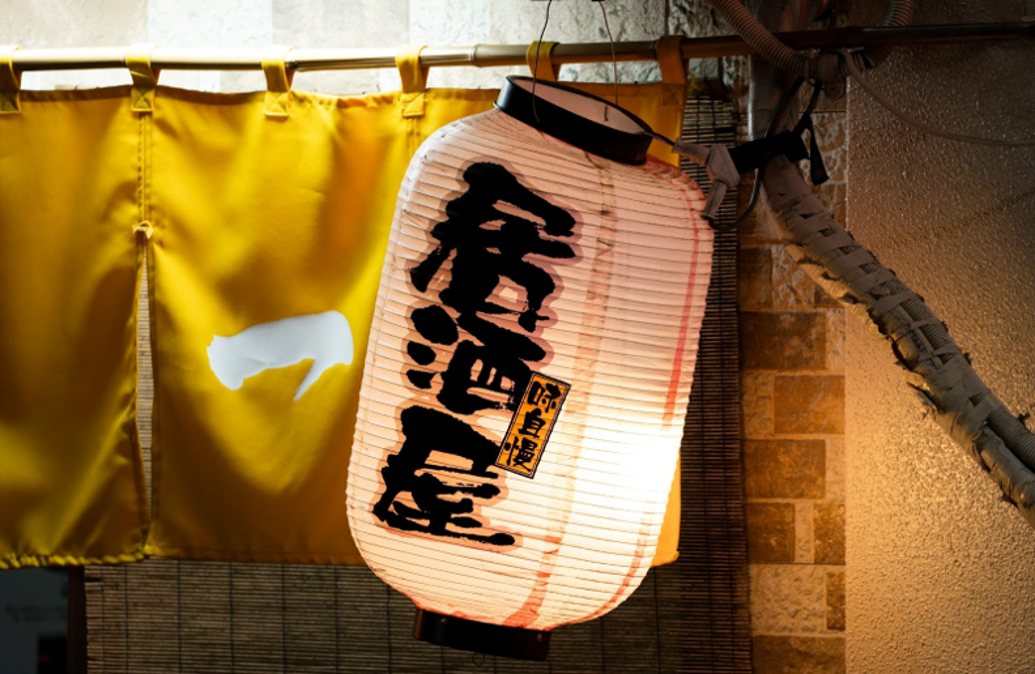
There Are Indeed Meaningful "Drinks"
When I was a rookie reporter, the time spent drinking with seniors after work was valuable. For a while, I was in charge of a major news story, so I would finish work at midnight or 1 AM, then drink with seniors until closing time at 3 AM, and had to come to work at 6 AM the next morning--this happened frequently during that tough period, but drinking with seniors on the same project was meaningful.
At that time, in terms of information gathering, I was in a stronger position than reporters from other companies. The media inevitably has a competitive mindset. In that environment, we were "winning" almost every time, so our after-work drinking sessions became exciting "strategy meetings," where we'd say things like: "Alright, how should we put this information together into a scoop-worthy segment for tomorrow?" or "Maybe next time we could try asking questions from this kind of angle?"
Of course, there were many words of praise like "Well done!" and simply I felt happy.
Of course, this was a lifestyle possible because I was young, and my time as a rookie reporter was about 20 years ago, so it may be a story from an old era.
On another occasion, a senior took us new employees out for drinks and told us something memorable: "We were treated a lot by our seniors when we were young, so now we want you to do the same for your juniors."
Because of such experiences, when I became a mid-level employee, I was in the position to "give back to juniors." I often had one-on-one drinks with juniors who worked hard on the same projects.
However, looking back now, these "drinks" being meaningful had something in common.
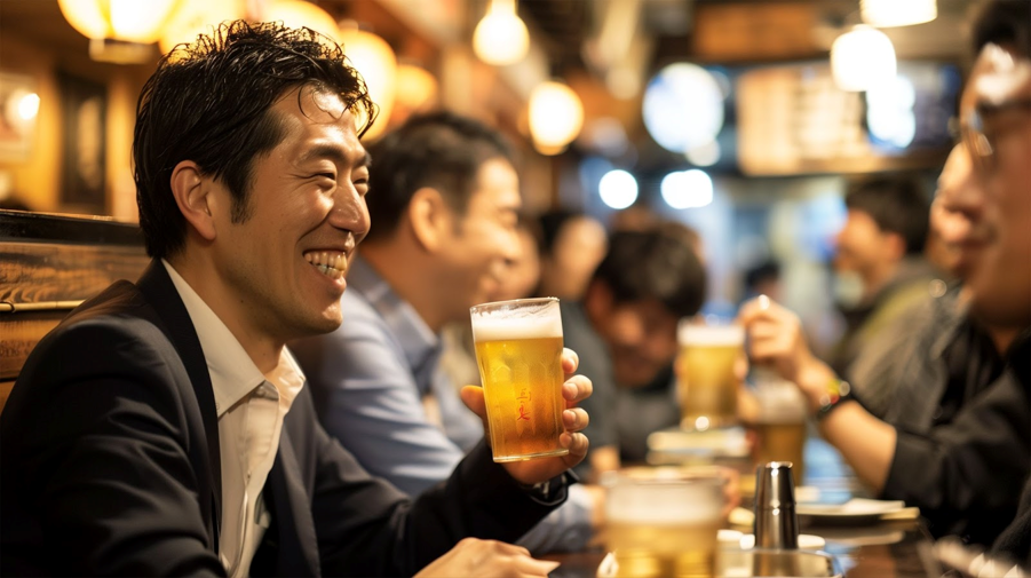
The Subordinate Being the Main Character
In all cases, we were talking about work. Moreover, even if it started with complaints, it would end on a positive note. How could we do more "proactive" work from tomorrow onward?
I would listen to voices from the field (even if they were expected complaints), and at the same time give advice from my own experience and knowledge, and at the end of such conversations there would be a clear conclusion like "Let's do something new!" or "Next time, let's do something interesting like this!"
Rather than just communication, it felt like an opportunity with a beginning-middle-end structure of "appreciation," "complaint listening," and "how can we do interesting things." By the time work ended, we were hungry anyway, and there's the thinking that it's more efficient to do this while eating.
Note that I believe drinking sessions are meaningful only when the subordinate is at the center of the conversation. It's not a place for the boss to talk about what's on his or her mind and feel good. Subordinates are not bar staff.
If it's a place where "overtime pay doesn't come out, but I got to eat delicious food for free and gained knowledge," wouldn't you want to go again? It would be best if you could feel it was worth the hourly wage.
The Option Not to Drink
On the other hand, when I was at mid-level, the department I was in was very energetic, and we'd frequently have situations where, even starting somewhat late, everyone would go "Let's all go eat yakiniku!" However, around this time I had health issues, so I rarely participated.
The next morning, since I was the only one who hadn't eaten yakiniku, the smell from others (which the yakiniku-eating members didn't notice among themselves) was quite intense, but I actually felt respect for the members who worked properly the next morning even after drinking until late at night.
This yakiniku was largely held as an opportunity to appreciate each other's hard work, and I knew they were having fun with truly work-unrelated silly conversations, and colleagues would tell me about the previous night's drinking party every time, so I didn't particularly feel left out.
The fact that colleagues and juniors understood that I had health issues and didn't have the stamina to drink until late at night was also significant. I was grateful for that understanding, and it created an environment that made me want to return the favor through my work.
Also, there was also a boss who never drank on weekdays and was strict about either going straight home or going out to pursue a hobby.
It seems that on weekends he would sometimes invite subordinates who shared his interests over to his home, but maintaining an equal distance from everyone might also be seen as one way of being a boss.
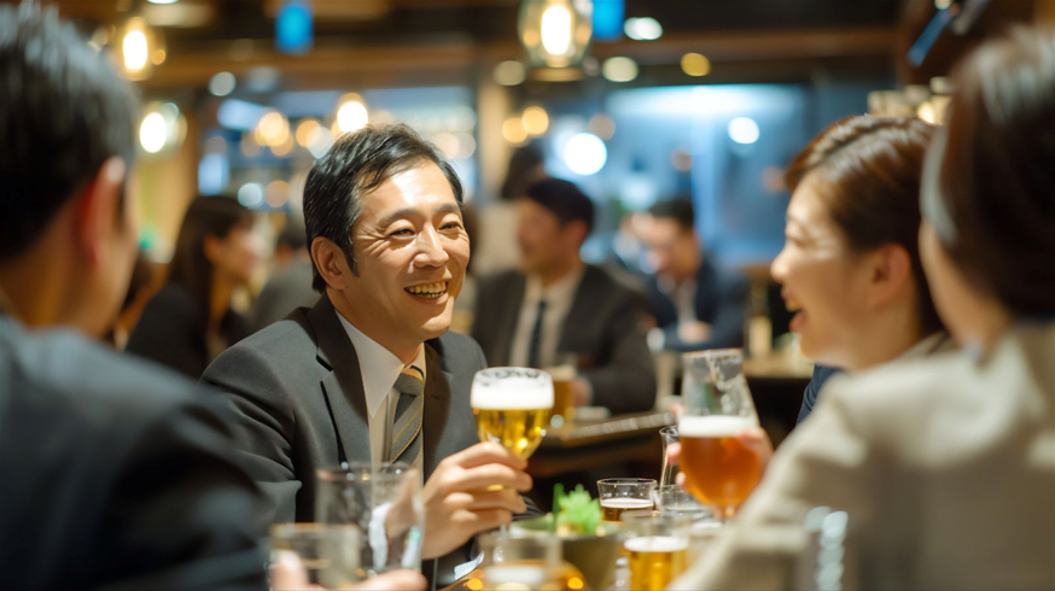
Good Examples of Creating Opportunities for Interaction
In any case, it might be that nowadays it's harder to casually ask someone, "Shall we go for a drink?" than it used to be.
However, there are some initiatives that I think work well as a way to create such opportunities.
For example, at one company I observed, there was a café-and-bar space within the office where employees could even have a beer after working hours as part of the company's benefits. This kind of setup seems to lower the hurdle quite a bit.
At another company I visited for reporting, they held informal gatherings in a meeting room roughly once every three months. I think this could also be seen as a form of in-kind compensation for the time spent, much like paying for those hours.
However, time should be strictly observed. It shouldn't drag on endlessly.

Isn't This More About "Evolution of Entertainment" Than "The Times"?
What do you think? If a boss keeps their subordinates tied up without being able to give them a real sense of "getting something out of it," that's just wasting their time.
In that case, it's only natural for people to start feeling, "Then pay me overtime!" If all you want is for someone to listen to you talk, or just to drink cheerfully together, there's certainly no obligation for others to go along with that.
That said, I don't think today's attitudes simply mean that "the times have become harsher" or "people have grown colder."
These days, there's plenty of affordable, time-efficient entertainment available right at home. Even without going out, people can easily connect with friends through social media or online communities--and it's simply easier that way.
"Let's both leave work on time and play Mario Kart! Just for an hour from nine!"
There are surely many young people who would find that option far more appealing. If you truly want to communicate outside of work in a relaxed setting, perhaps it's time to think about aligning with the kinds of leisure activities that appeal to the younger generation.
If a company or a manager still believes that "communication means alcohol," it might be time to rethink that assumption from the ground up.

Sayaka Shimizu
After graduating from the Faculty of Science at Kyoto University in 2002, She worked mainly as a news reporter at TBS. She covered a wide range of topics including incidents, accidents, and technology as a reporter in the Social Affairs Department, and various markets and industries as a reporter in the Economics Department before going freelance. She has contributed to many media outlets based on his reporting experience and analysis of various statistics.