


March 2, 2026
Let's Aim for Reciprocal Communication: What We Can Learn from Cats
The basics of communication are "reciprocity" -- let's learn the knack from our relationships with cats
Cat, neko, kitty, cat... The sheer number of videos online shows just how loved cats are by humans.
You're working on your computer and they get in the way; you try to get up and they cling and won't let go--only to turn suddenly aloof as if to say, "Not in the mood now." And sometimes they're downright mischievous.
If the other party were a human, you'd be tempted to snap, "What's with this person?!" Yet cats are a rare creature whose very selfishness we still adore.
Why is that?
It's said that the communication between humans and cats has reciprocity. That's why the relationship stays good. This piece explores that idea--and there's a lot we can learn from cats when communication at work isn't going well.
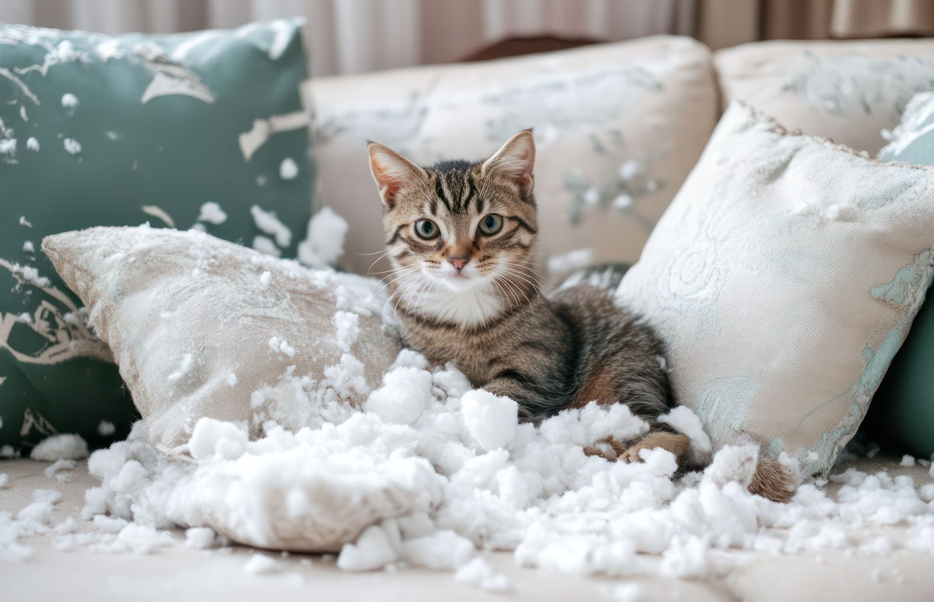
Cats show the greatest individual differences
Pioneer feline researcher Dr. Dennis Turner has said that "among all animals, cats have the greatest individual variation." In other words, cats have strong personalities, and those personalities shape each individual cat's behavior. *1
If you lead a team whose members are too individualistic and act according to their quirks, you as the leader might feel intense stress.
But when you get home to your beloved cat, even if they've pulled some highly individual prank, you probably won't shout. You might even feel like posting the episode on social media. To me, that's one of cats' biggest mysteries.
I can't keep a cat myself, but the cats I often see on YouTube are the clingy type--"hug me and never let go." Of course, not all house cats are like that.
My friend says that the cat she owns hardly ever lets even its owner pet it. If someone's foot happens to touch it while it's sleeping under the kotatsu, it will scratch or bite without mercy. Even when nothing happens, it sometimes suddenly bites for no apparent reason.
My friend's arms and legs are always covered with scratches. And yet, from time to time, the cat suddenly snuggles up to her and purrs softly -- and that very mix of aloofness and affection makes it all the more adorable, she says.
Same species, but quite different from the sweet cuddlebugs I see in videos.
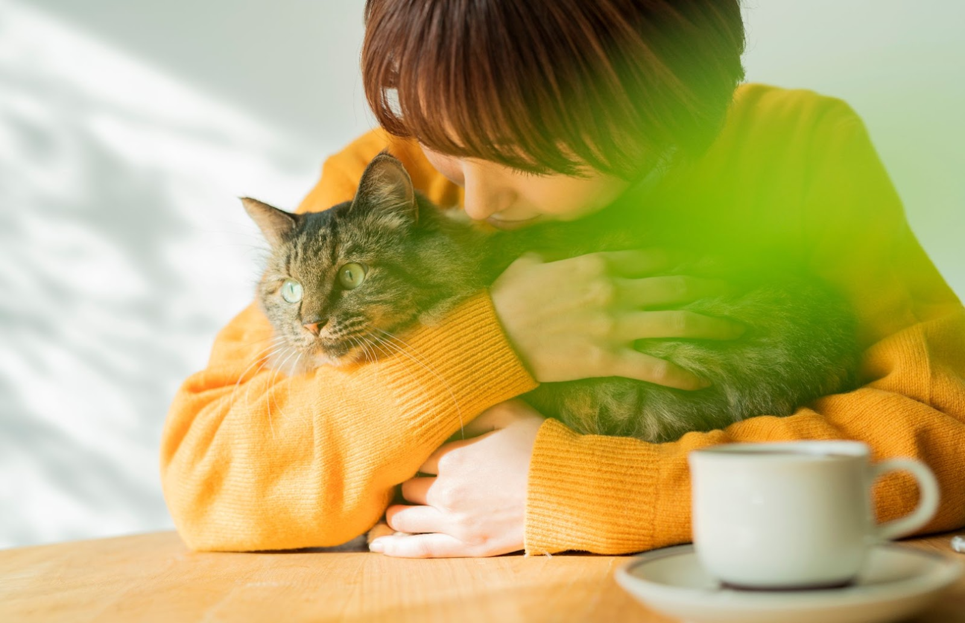
Cats and humans: a relationship
Thinking about cats this way, it seems only natural--indeed, a law of nature--that human group members also differ in personality and behavior.
Yet when it comes to human groups, both leaders and peers end up feeling stressed.
But with cats, we still find it cute.
The human-cat relationship is a curious one.
Why do humans keep cats?
Claire Bessant, who served as the Chief Executive of International Cat Care for 28 years, poses a question about why humans keep cats:
"It seems we have a cat-shaped hole in our lives and want to fill it. But why? Because we want to look after a cat? To rescue an unfortunate cat? For power, or for creativity? The cold-hearted might say we do nothing without a return. But aside from any return, perhaps it's simply the satisfaction that comes from giving and sharing. Of course, just as every cat has its own personality, so does every human--and motives for keeping cats vary widely from person to person."
(From Claire Bessant, The Cat Book, p.111)
And while humans tend to shower their beloved cats with new toys, cushions, and the like, Bessant even notes that "unfortunately, there are times when human needs take precedence over the cat's happiness." *2
There are types of human-cat relationships
That's because the personalities of cats and their owners come together by chance, and since both have their own wills, it is not always possible for them to begin living in perfect harmony right from the start.
A survey conducted in the UK among cat owners revealed that there are many different types of relationships between owners and their cats.*3 These included "open," "aloof," "easygoing," "codependent," and "friendly" relationships.
Interestingly, about one in four respondents described theirs as an "open relationship," making it the most common type.
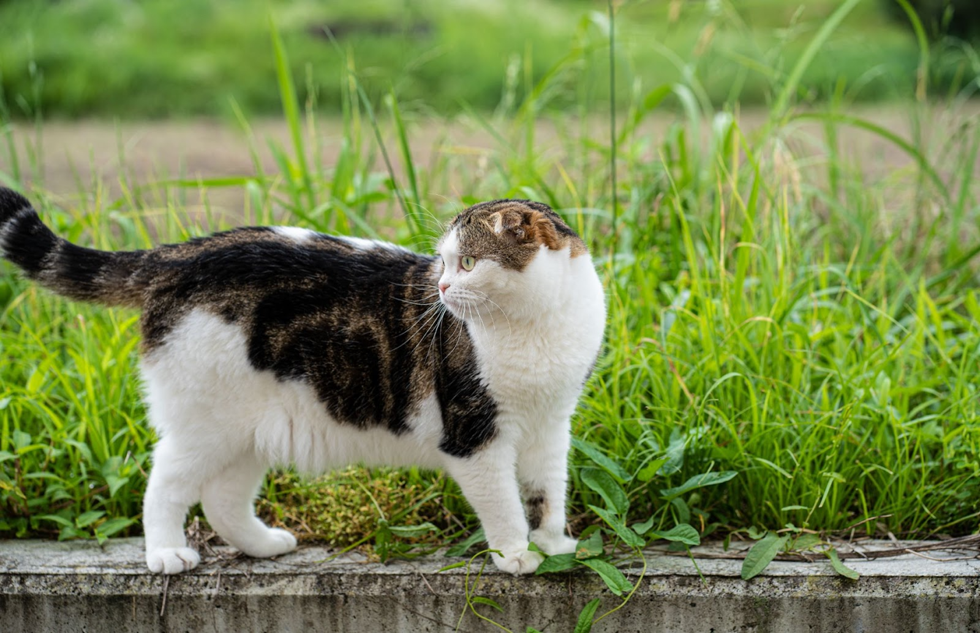
What is an "open" human-cat relationship?
An open relationship is one in which both sides are essentially neutral, and the owner's feelings toward the cat are balanced. Many such cats are allowed outdoors, and they're independent beings who get along with people beyond their owner.
What about the other types? As you read, imagine what kind of relationship you--as a manager--might have with your team members.
●Aloof relationship -- The owner has little emotional identification with the cat. Even if the cat is attached only to the owner, the owner doesn't see the cat as especially friendly or as a member of the family.
(Note: this survey didn't capture the behavior of cats seeking their owner when anxious.)
●Easygoing relationship -- The cat is friendly with anyone and doesn't seem to need the owner more than other people.
●Codependent / Friendly relationship -- In both, the owner's attachment is strong; the difference is whether the cat accepts people other than the owner. In codependency, the cat may get along with others but prefers the owner. Owners in this group often play with the cat and stay nearby while it eats.
Now, let's consider these from the cat's perspective.
In that sense, the open relationship is one ideal.
The friend I mentioned earlier lives under the same roof as her cat, yet she usually doesn't pay much attention to what the cat is doing or where it is.
When she occasionally checks, she might find the cat sleeping upstairs, or discover that it had been running around like a one-cat carnival in the middle of the night. But by morning, the cat is often sleeping at her feet.
It seems that they maintain a comfortable "distance," without being overly clingy.(She does have a bit of trouble with the fact that after these nighttime "carnivals," the cat always lines up its "prey"--usually insects--by her pillow, but from the cat's perspective, that is a sign of affection.)
Even so, my friend's cat understands her.
When she is unwell and resting, the usually stand-offish cat stays close by. Once it senses her recovery, it turns away and wanders off to its favorite room. It can worry deeply about its owner, yet usually approaches only on a whim.
This makes sense.
All animals avoid unpleasant stimuli. When cats don't want to be touched, they resist. Chasing them and desperately trying to engage them with toys is exactly when "unfortunately, human needs are taking precedence over the cat's happiness."
For all that, pet cats do need their owners.
A distant relationship is something to avoid in human teams, and codependency is also tough among coworkers--imagine needing to supervise even each other's mealtimes.

The danger of imposing your own "idea of the other"
We've been talking about human-cat relationships, but the same behaviors that would infuriate us from a human are forgiven in cats.
So one approach is to deliberately treat the other person as "cat-like" when building relationships. Human individuality is only natural. Each of us has things others find hard to understand, and our "pet peeves" differ.
When humans imagine keeping cats, the image is often "they don't always listen, but they're fluffy and soothing." Yet cats have their wildness and, reportedly, the highest individuality among animals. That's where humans start imposing their own imagined "cat image."
You might get excited and buy a new toy thinking, maybe this will make them like me. But from the cat's perspective, it can feel like an unwanted imposition. In that case, only the human is satisfied--"I bought something for you."
Even in human relationships, it is nearly impossible to fully understand another person's personality. However, if we impose our own preconceptions of who the other person is onto them, a healthy relationship is unlikely to develop.
A successful relationship requires both parties to be relaxed and to maintain a distance that suits each other's personalities, while contributing to their respective strengths. Without such reciprocity, no relationship can last.
It is also worth remembering that cats, in some form, seek out their owners when they feel anxious. That said, it is not always clear whether this is because they expect food or because they seek connection. So, whenever you find yourself worrying that a cat dislikes you, it can be helpful to recall that their behavior is often simply capricious.
1, 2, 3 -- Claire Bessant, The Cat Book, pp.6-7, 109, 111-113.

Sayaka Shimizu
After graduating from the Faculty of Science at Kyoto University in 2002, She worked mainly as a news reporter at TBS. She covered a wide range of topics including incidents, accidents, and technology as a reporter in the Social Affairs Department, and various markets and industries as a reporter in the Economics Department before going freelance. She has contributed to many media outlets based on his reporting experience and analysis of various statistics.