


February 2, 2026
A New World That Comes into View When You Aim for Your Own "Me-Style"
How a single line from a Jiro-style ramen owner pierced my heart as a take on "being yourself" in making things.
Jiro-style ramen. Plenty of people probably drop by for it at lunch now and then.
Thick, rugged noodles piled high with vegetables and garlic, slabs of chashu. On top of the defining "big portions," there's a whole vocabulary--ordering "calls" like mashi-mashi (extra-extra) or nuki (without), and the batch-flow practice known as lotto mawashi.
Inspired by the original Jiro ramen or its "branch-off" shops, more and more ramen chefs have fallen for the Jiro-style. Now, Jiro-style ramen shops all over the country are always crowded with long lines.
For someone like me with a weak stomach, the Jiro world is honestly too much (I have gone, though). Still, something a Jiro-style owner said stuck with me.
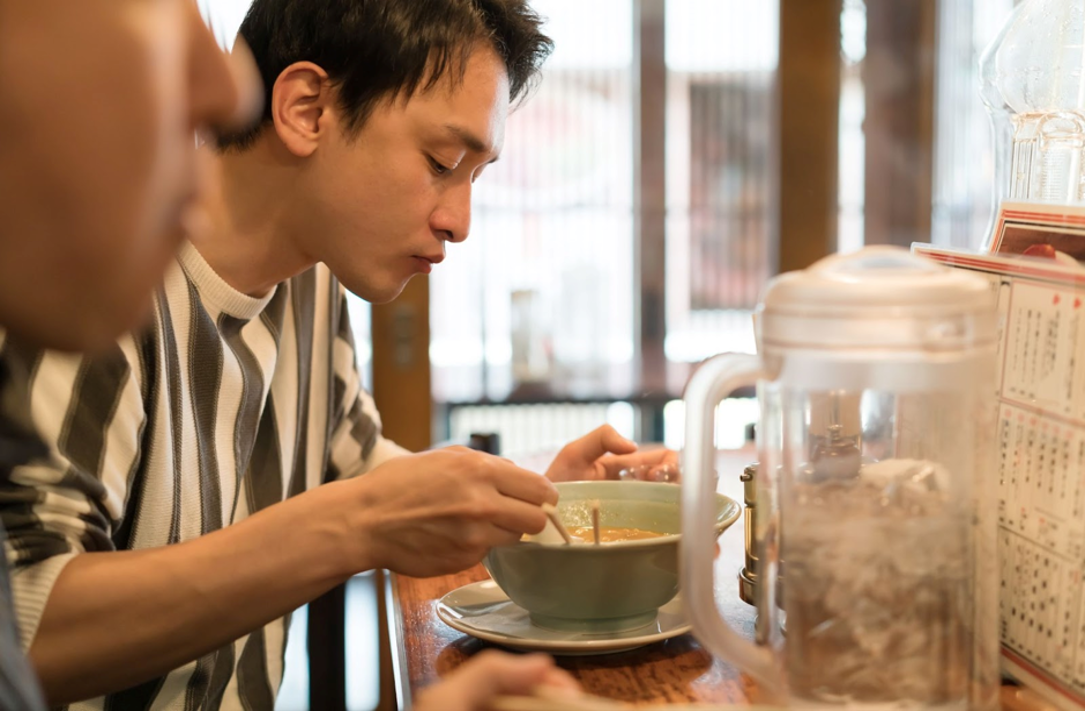
The World of "Jirorians"
For a while I lived near Tamachi Station, in the Shibaura/Mita area. Keio University's Mita campus is there, so the neighborhood has a student vibe. Tucked away nearby stands Ramen Jiro's Mita Honten.
I thought, "Whoa, the famous place is right here?" Sure enough, at mealtimes a line would form--clearly popular.
A soy-based, punchy broth; rough, chewy thick noodles; a mountain of vegetables and thick chashu. The very definition of "volume."
That's the base, and then customers add toppings via a "call."
Garlic, vegetables, and abura (pork backfat): mashi or mashi-mashi? Seasoning: as is, or karame (extra salty)?
And there's an unspoken rule: "Don't disrupt the lot."
Lines are a given in Jiro-style shops. To keep things moving, bowls need to be made in a steady rhythm, turning the room over. If a group finishes around the same time, the kitchen can cook the next batch all at once and serve efficiently.
But if one or two people in the group eat slowly, that rhythm breaks. That's called lotto midashi--"breaking the lot"--and it's not appreciated.
Once, on a work trip, I went to a Jiro-style place because our crew wanted to. Keeping pace with the guys was pure hardship for someone like me who prefers to eat at my own speed. There was no time to savor anything.
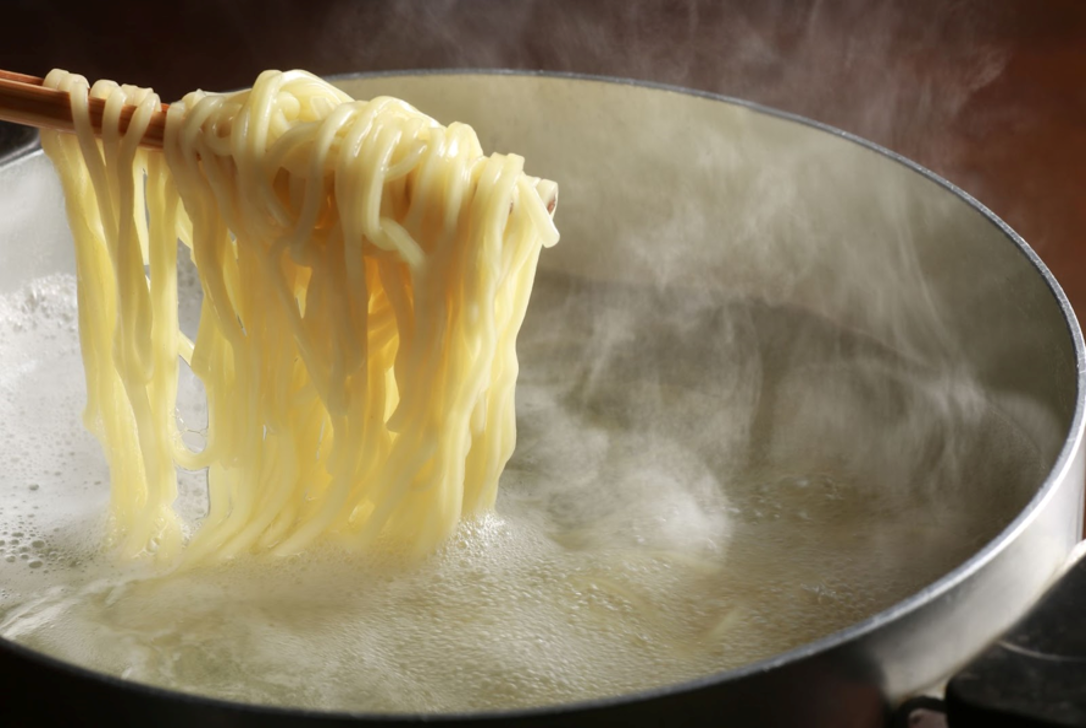
"Jiro Respect" Shops Nationwide
Today, shops that love Ramen Jiro and serve their own carefully studied "Jiro-kei" bowls have spread across Japan.
A ramen YouTuber I watch is one such Jiro fan. His videos, in which he eats his way around Japan, often include interviews with the owners.
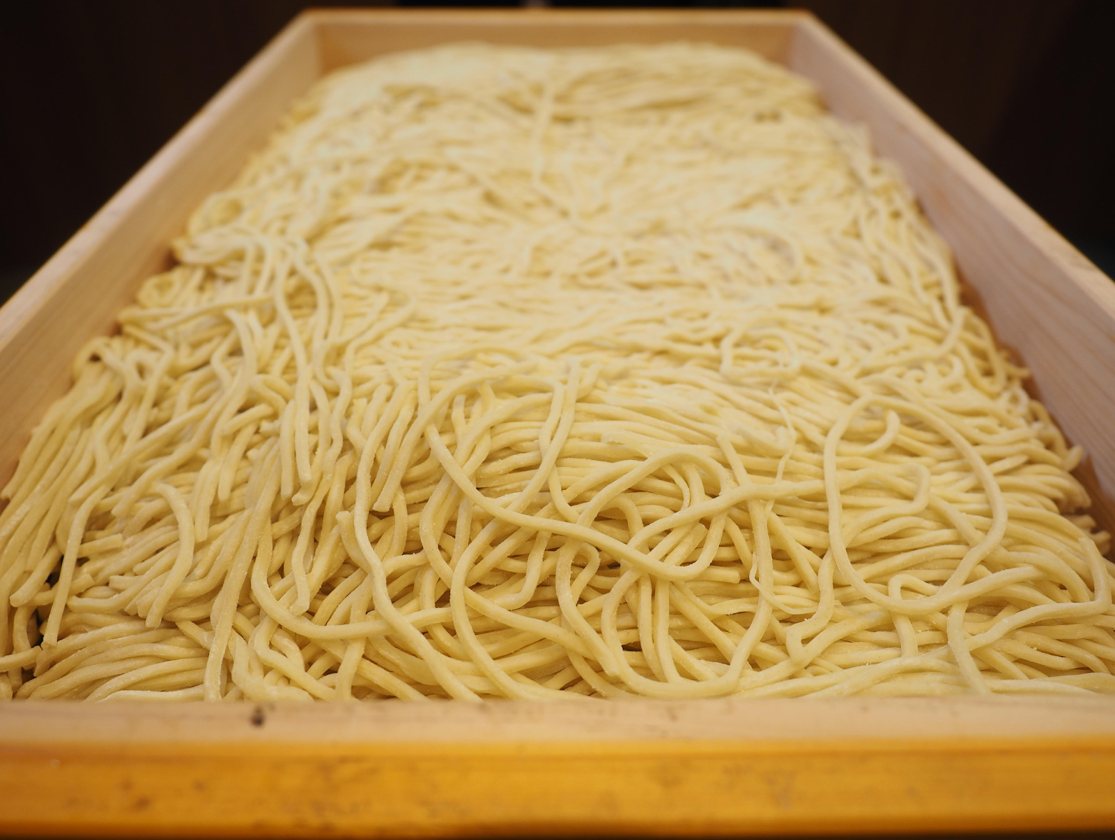
One manager in particular had long admired Ramen Jiro--he kept eating, kept studying, and eventually opened his own place. Now, on holidays only, he hand-rolls and serves noodles even thicker than "extra-thick": his "oni-thick" noodles.
Honestly, at a glance they're basically udon. Udon! Noodles that thick, yet still ramen noodles--the chew must be intense. If it were me, I'd have to slurp one or two strands at a time.
There's a reason he created them. He says the "oni-thick" noodle is a noodle from his memories. The shop that used to serve it is gone, and you can't just get that taste anywhere anymore. "Then I'll just make it myself," he thought.
At the root is a feeling like this:
"I just want there to be lots of people who love what I love."
Some people will be into it; others won't. But he wants more people to know what he loves, and he'd be happy if more folks ended up loving the same thing.
That candid sentiment warmed my heart.
The "If It Doesn't Exist, Make It" Generation
"If it doesn't exist, make it yourself."
It's simple, but I feel like it's something people from the era of scarcity had in common.
I know someone who just keeps building guitars--cutting the body, painting, installing parts--chasing the sound he wants. When I asked why he started, he said: back then, there wasn't as much stuff as there is now, so making things yourself was just normal.
One day he dumped out a cardboard box full of parts and thought, "Huh, I could finish a whole guitar with just this."
How about us now?
If we can't find what we want, we head straight to Amazon or specialty online shops. If you go to Akihabara to buy a cable, people call you an "otaku."
So we don't often think, "Maybe I could make it myself."
But that's exactly the essence of making. Whether it succeeds or whether people like it can come later. If you don't think that way, you'll just pile up reasons not to try.
Lately it's the same with AI. If someone says, "Why aren't you using such a convenient tool?" and you feel ashamed every time you haven't heard of one, you'll never move forward. Plus, what the world calls "convenient" doesn't always match your purpose.
It's fine if people think you're a bit inefficient. The time you spend hunting for "reasons not to" is the real waste.
That ramen owner, by the way, doesn't just offer "oni-thick" as a holiday special--on holidays he serves only that. I don't know what that does to sales, but his passion to spread the word is admirable.
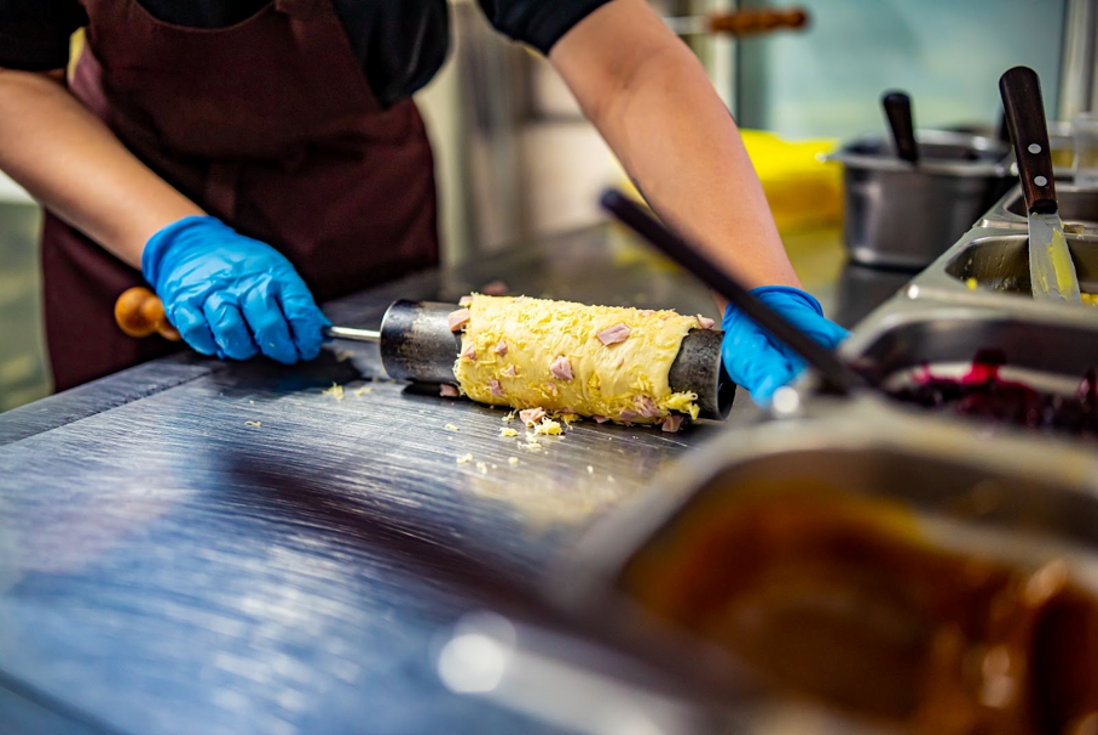
Aiming to Stand Beside Ramen, Sushi, and Pasta
Another cooking YouTuber said something intriguing.
He's known for making "weird" dishes--not gross, just unconventional--and he always eats them himself and gives his impressions.
Like breading and deep-frying a rolled omelet to see if it's tasty, or compacting a foreign dish into pressed sushi.
At one point he talked about why he keeps making food like that.
He said everyone has a "favorite food," right?
Ramen, sushi, pasta..., we usually talk in those big categories. He wants to create a dish that can stand alongside those "big categories." His daily oddball recipes are experiments aimed at that goal. Maybe he said it offhand, maybe he meant it--but it's a pretty huge dream.
I found myself going, "Wow, what a mindset."

Maybe Making Things Is Your Inner Self, Made Visible
"When words become powerless, music begins."
So said the great composer Claude Debussy.
Since I work in this kind of job, I am, in a sense, a "person of words." Even so, there are aspects of myself and things I want to express that only come out through playing music. Lately, I've been thinking that if I were to go without either writing or music, I might, in the extreme, completely lose my mind.
In music, it's really hard to convey "the sound you want."
Shut in a studio, bandmates end up talking in onomatopoeia and sound effects.
A sax teacher once told me:
"You say you want a good tone. What's a 'good tone'? Whose album, which track are you talking about?"
That hit me hard. I realized how little I actually understood.
If you vaguely say "let's make something good," life turns into a boring chore. Push the question all the way to "What does 'good' mean?" and a goal appears.
By facing yourself, the concrete image of what you want to make comes into focus. It's not easy work, but when you pick up your own desires, you often end up saving yourself.

Sayaka Shimizu
After graduating from the Faculty of Science at Kyoto University in 2002, She worked mainly as a news reporter at TBS. She covered a wide range of topics including incidents, accidents, and technology as a reporter in the Social Affairs Department, and various markets and industries as a reporter in the Economics Department before going freelance. She has contributed to many media outlets based on his reporting experience and analysis of various statistics.